Entwurf – nicht öffentlich · Stand 15.11.2026 · Texte, Preise und Bildrechte noch nicht mit Matthias Busl abgestimmt
Start › Literatur
Zum Vertiefen

Literatur & Quellen

Die Ziffern in den Texten verweisen auf diese Liste. Mit frei markierte Titel sind kostenlos online lesbar.

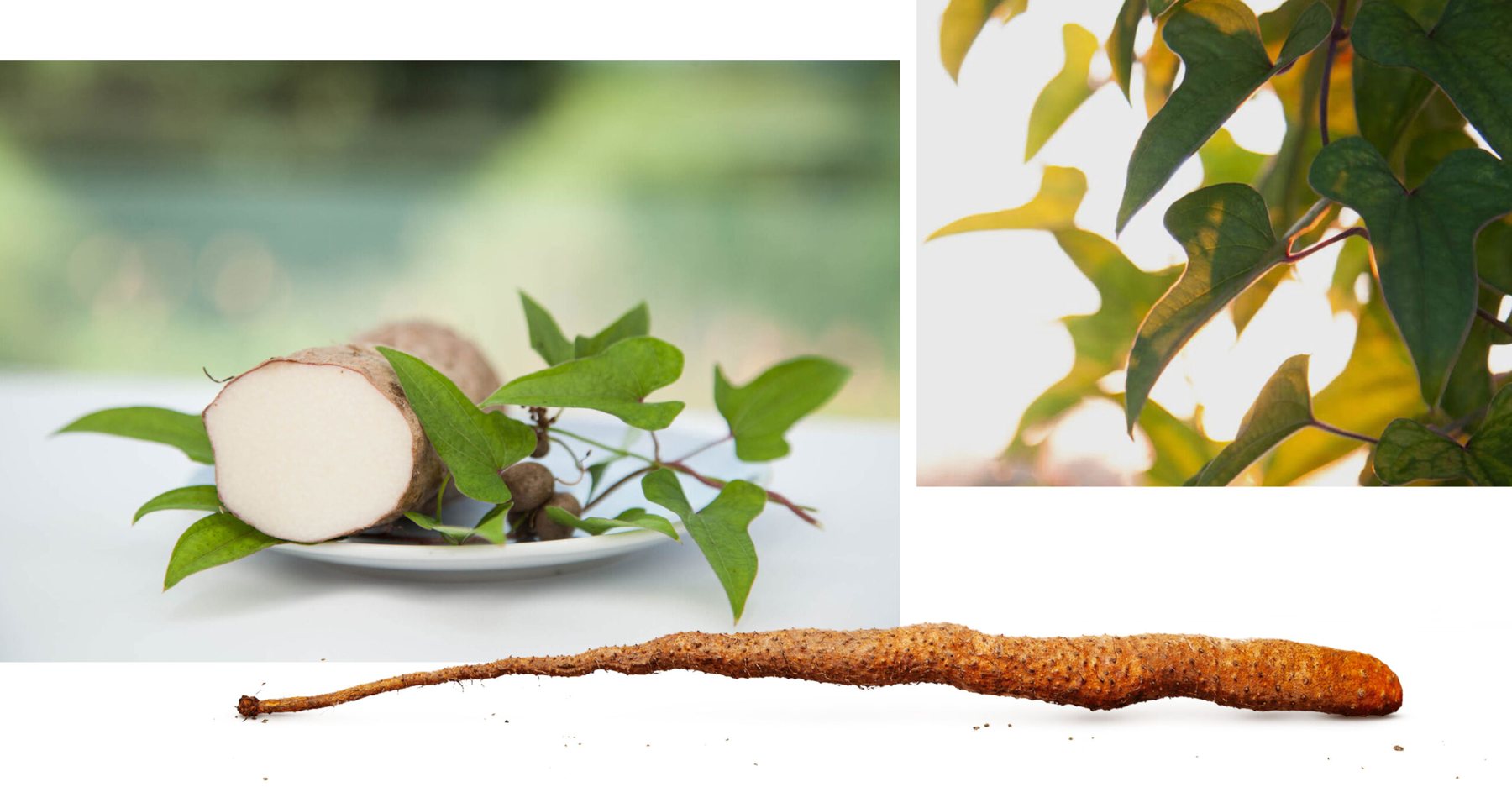
Collage: Knolle, Blätter, Bulbillen
Foto: [Fotograf/in]
  1. Hartkemeyer, T. & J. (Hrsg.), mit Beiträgen von N. Böken, M. Busl, S. Hagg, U. Küpper, H. Ramm, B. und P. Schleyerbach, N. Schmidt, J. Zeng: Die Chinesische Yam – Dioscorea batatas. Geschichtliche, botanische und gesundheitliche Aspekte zur Lichtwurzel. 6. überarb. und erw. Auflage, Books on Demand, Norderstedt 2025. ISBN 978-3-7528-1682-2. Seitenangaben nach der 6. Auflage [Seitenzahlen nach Endsatz prüfen].
  2. Busl, M.; Epping, J.; Weng, A. (2026): EKO-YAM – Etablierung kosteneffizienter und nachhaltiger Anbausysteme für Yams. Schlussbericht BMFTR-Programm KMU-innovativ: Bioökonomie (FKZ 031B1276A–C). TIB Hannover. doi:10.34657/41268 frei
  3. Krüger, D.; Drell, P.; Riekötter, J.; Altmannshofer, J.; Weber, R.; Busl, M.; Epping, J.; Weng, A. (2026): Cultivation techniques of yam influence the amount of primary and secondary metabolites. Frontiers in Agronomy 7:1680343. doi:10.3389/fagro.2025.1680343 frei
  4. Epping, J.; Laibach, N. (2020): An underutilized orphan tuber crop – Chinese yam: a review. Planta 252:58. doi:10.1007/s00425-020-03458-3 frei
  5. Krüger, D.; Weng, A.; Baecker, D. (2024): Investigating the Discoloration of Leaves of Dioscorea polystachya Using Developed Atomic Absorption Spectrometry Methods for Manganese and Molybdenum. Molecules 29:3975. doi:10.3390/molecules29163975 frei
  6. Riekötter, J. et al. (2023): Transcriptomic analysis of Chinese yam (Dioscorea polystachya Turcz.) variants indicates brassinosteroid involvement in tuber development. Frontiers in Nutrition 10:1112793. doi:10.3389/fnut.2023.1112793 frei
  7. Worzewski, T. (2026): Yams-Anbau in Deutschland: Vier wirtschaftlich nachhaltige Anbaumethoden und deren pharmazeutisches Potenzial. bioökonomie.de, mit Projektfilm. bioökonomie.de · Film (YouTube) frei
  8. Andreashof e.V.: Die Lichtwurzel am Andreashof – Anbau, Verarbeitung, Forschung. andreashof-bodensee.de
  9. Freund, A. (2021): Lichtwurzel – Chinesische Yams. Natur & Heilen 12/2021, S. 31 ff. (Reportage vom Andreashof). PDF
  10. Projektdatenbank Pflanzenforschung.de / Bioökonomie: EKO-YAM – Etablierung kosteneffizienter und nachhaltiger Anbausysteme für Yams (Koordinator: Dipl.-Ing. agr. Matthias Busl). pflanzenforschung.de
  11. Andreashof e.V.: Der Verein (Vorstand). andreashof-bodensee.de/verein
  12. Andreashof e.V.: Lichtwurzelführung (Termine und Anmeldung). andreashof-bodensee.de
  13. Worzewski, T. (2026): Wunderwurzel Yams. bild der wissenschaft 4/2026 (Reportage über EKO-YAM, Bezahlinhalt). wissenschaft.de

Fragen zum eigenen Standort? Matthias Busl berät telefonisch, per Video oder bei einem Betriebsbesuch. Erstberatung pauschal 50 €.

Zur Beratung